


WELLthier Living and Aging
WELLthier Living and Aging
Yoga Can Help Shorten Opioid Withdrawal
 By
By
A 2026 randomized clinical trial published in JAMA Psychiatry examined whether yoga, when added to standard medical treatment, could help people recover more quickly from opioid withdrawal and improve how the body regulates stress. Opioid withdrawal often overstimulates the body’s stress response, which medications alone may not fully correct and which can increase the risk of relapse.
Researchers conducted a two-arm clinical trial in an inpatient addiction treatment ward. The study included 59 adult men aged 18 to 50 with opioid use disorder and mild to moderate withdrawal symptoms. Participants were randomly assigned to one of two groups: one group received standard treatment with buprenorphine, while the other group received buprenorphine plus yoga.
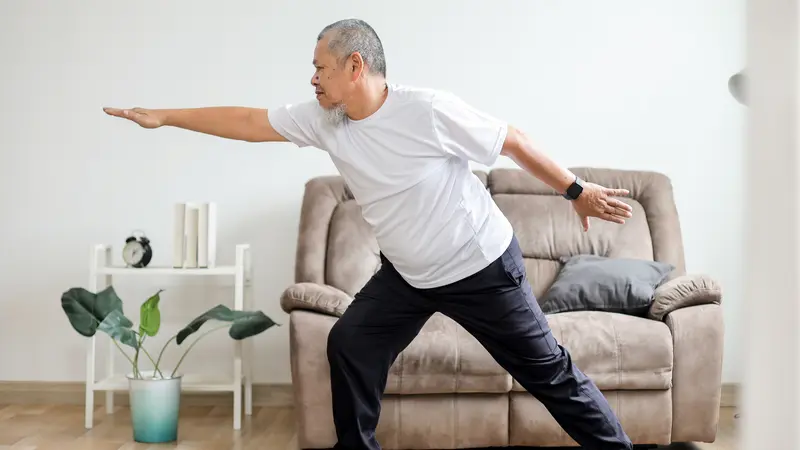
The yoga group completed ten supervised 45-minute sessions over a two week period. Sessions included physical postures, breathing exercises, relaxation practices, and guided rest. Researchers measured how long it took participants to stabilize from withdrawal using a standard clinical scale. They also measured heart rate variability (which reflects balance in the nervous system), along with anxiety levels, time needed to fall asleep, and pain. Measurements were taken at the start of the study and again after 15 days.
Participants who practiced yoga recovered from withdrawal much faster than those who received medication alone. The typical time to stabilization was five days in the yoga group compared with nine days in the control group. The yoga group also showed greater improvements in heart rate variability, indicating better regulation of the body’s stress and calming systems. Anxiety levels dropped more in the yoga group, sleep onset improved by about one hour, and pain scores were lower.
REFERENCES
Goutham S, Bhargav H, Holla B, et al. Yoga for Opioid Withdrawal and Autonomic Regulation: A Randomized Clinical Trial. JAMA Psychiatry. Published online January 07, 2026. doi:10.1001/jamapsychiatry.2025.3863