


Complementary and Alternative Medicine (CAM)
Complementary and Alternative Medicine (CAM)
Mind-Body Practices Help Ease Distress in Cancer Survivors
 By
By
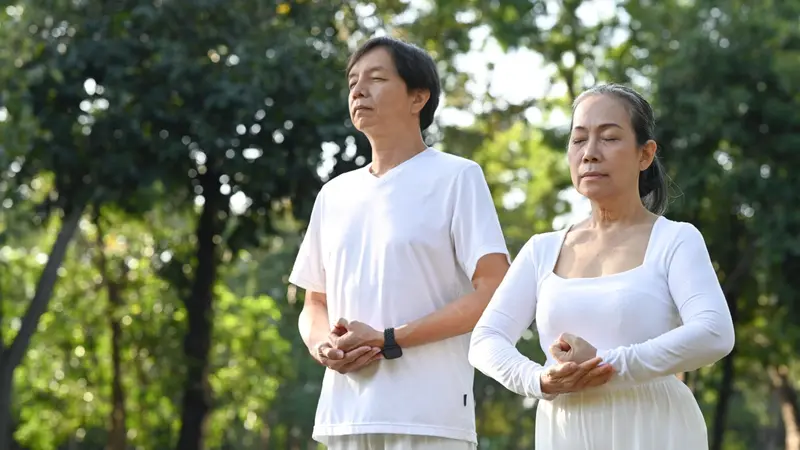
Many cancer survivors continue to experience emotional distress, anxiety, and depression long after treatment ends. Two practices shown to help are mindfulness-based cancer recovery (MBCR), which combines meditation and gentle awareness exercises, and Tai Chi/Qigong (TCQ), which uses slow, flowing movements to calm the mind and strengthen the body. Although both methods have been proven helpful on their own, this was the first study to directly compare them while allowing participants choose which approach they preferred.
The University of Calgary collaborated with the Harvard Osher Center, inviting 587 cancer survivors from multiple sites to join the study. Most participants were women with an average age of 61, and the most common cancer types were breast, prostate and gastrointestinal cancer. Two-third of the participants sorted themselves into a preferred group (57% of that two-thirds chose TCQ and 43% chose MBCR). The remaining patients without a preference were randomly assigned to one of the two. Everyone was also randomly placed either in an immediate intervention group or on a waitlist to serve as a control.
After completing their respective programs, participants’ moods were assessed using a standardized psychological test called the Profile of Mood States. Both MBCR and TCQ improved participants’ overall mood compared with those who received no treatment, showing small to medium benefits. TCQ had the strongest effects on reducing anger and depression and was also linked to greater increases in energy or vigor. MBCR was most effective in easing tension and anxiety, though it did not significantly reduce depression. Neither program affected confusion or fatigue, and whether participants chose their preferred program or were randomly assigned did not change the results.
Overall, this large and practical study found that both mindfulness and TCQ can significantly improve mood and emotional well-being in cancer survivors experiencing distress. These mind-body practices offer accessible, non-medical ways to support recovery and enhance quality of life after cancer treatment.
REFERENCES
Mindfulness and Tai Chi for Cancer Health (MATCH) Study: Primary Outcomes of a Preference-Based Multisite Randomized Comparative Effectiveness Trial. Carlson LE, Jones JM, Oberoi D, Piedalue KA, Wayne PM, Santa Mina D, Lawal OA, Speca M. J Clin Oncol. 2025 Jun 12:JCO2402540. doi: 10.1200/JCO-24-02540. Epub ahead of print. PMID: 40505072.