


Traditional World Medicine
Traditional World Medicine
Cupping For Athletes
 By
By
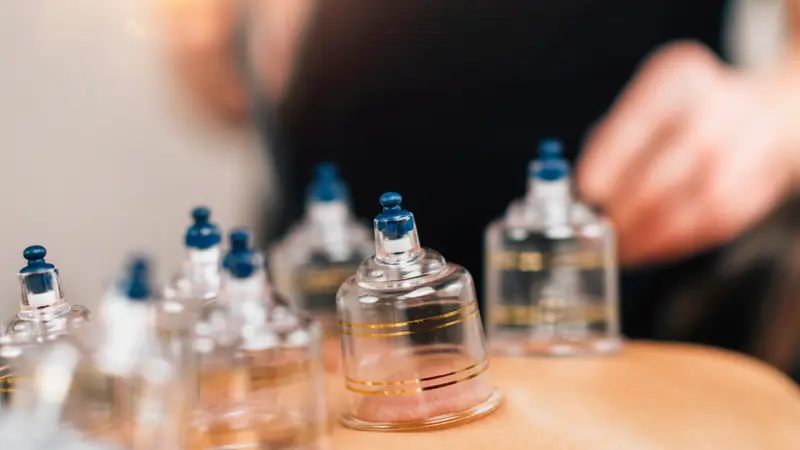
Athletes and coaches have long sought ways to enhance performance and speed recovery after intense training. One major limiting factor is muscle fatigue, defined as a reduced ability of muscles to produce force after repeated or sustained activity. Fatigue not only impairs performance but can also increase the risk of injury. Cupping therapy, a physical treatment used in Chinese medicine that applies negative pressure to the skin using bamboo, glass, or acrylic cups, has gained visibility in recent years as elite athletes have publicly adopted it. The suction creates mechanical stress on soft tissues and promotes local blood vessel dilation, leaving the characteristic circular marks on the skin.
Previous research suggests that cupping may help relieve exercise-induced muscle fatigue without causing harm. Studies have reported reductions in muscle pain and stiffness, improvements in local blood flow, and enhanced range of motion and functional performance in athletes. Because fatigue, inflammation, and recovery are closely linked, researchers have increasingly focused on blood-based markers such as white blood cell counts, inflammatory ratios, creatine kinase, blood urea nitrogen, and lactic acid to better understand how recovery interventions work.
Against this background, a 2025 study published in the Journal of Physiological Intervention examined whether dry cupping could reduce fatigue and inflammation in table tennis players following intensive training. Ten skilled athletes completed identical high-intensity training sessions under two conditions, one followed by dry cupping and one without cupping, separated by a two-week washout period. Fatigue was assessed using a rated perceived exertion scale, which reflects how hard the exercise feels, and blood samples were used to measure immune cells, inflammatory indices, and markers of muscle damage and metabolic stress.
The results showed that training intensity was similar in both conditions, indicating cupping did not change the workload itself. However, 30 minutes after training, athletes who received dry cupping reported feeling less fatigued and showed lower levels of white blood cells, neutrophil-to-lymphocyte ratio, and systemic immune-inflammation index, which suggests reduced systemic inflammation in the cupping group. Blood urea nitrogen levels also decreased after cupping, indicating improved recovery from metabolic stress. In contrast, creatine kinase and lactic acid levels were not significantly affected. Overall, the findings suggest that dry cupping may support post-exercise recovery by reducing inflammation and perceived fatigue, rather than directly limiting muscle damage.
REFERENCES
Yeh, Y.-A., Lu, C.-C., Chen, Y.-Y., Kuo, C.-H., & Fang, S.-H. (2025). Dry cupping attenuates inflammation markers and rated perceived exertion in table tennis players after intensive training. Journal of Physiological Investigation, 68(5), 266–273. https://doi.org/10.4103/ejpi.EJPI-D-25-00017