

Food, Farming and Nutrition
Food, Farming and Nutrition
Iodine and the EAT‑Lancet Diet
 By
By
As concerns about climate change and environmental degradation grow, nutrition experts are increasingly focused on how diets can support both human health and planetary sustainability. In 2019, the EAT Lancet Commission on Food, Planet, and Health published a landmark framework for a planetary health reference diet, called “Food in the Anthropocene". The goal was to reduce non-communicable diseases and premature mortality worldwide, while transforming food systems to stay within planetary boundaries and align with the United Nations Sustainable Development Goals and the Paris Agreement. The report quickly gained global attention and became one of the most influential and widely debated scientific publications on sustainable diets to date.
The original EAT Lancet diet is predominantly plant based, emphasizing whole grains, fruits, vegetables, legumes, nuts and unsaturated oils, with low to moderate amounts of seafood, poultry, eggs and dairy, and very limited red or processed meat. The Commission stated that this dietary pattern could meet all essential nutrient needs for people over the age of two. However, because most plant foods are naturally low in iodine unless fortified, questions remain about whether the diet can reliably provide enough iodine across different countries and food systems.
The Importance Of Iodine
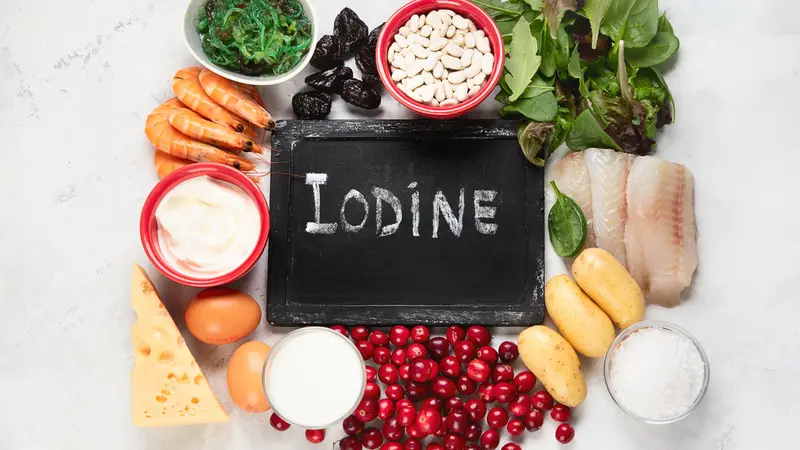
Iodine is an essential micronutrient required for thyroid hormone production and is critical for metabolism, growth and brain development. Inadequate iodine intake can cause thyroid disorders and impaired cognitive development, particularly during pregnancy and early life. Iodine deficiency is the leading cause of preventable intellectual disability worldwide, making adequate intake a major public health priority. Vulnerable groups, including children and adolescents who have different iodine needs relative to their body size, and pregnant women, for whom iodine is critical for healthy fetal development, are particularly at risk if intakes are insufficient.
Many countries address iodine deficiency through fortification strategies, such as requiring producers to add iodine to table salt or bake bread using iodized salt, but policies vary widely. In countries like the United Kingdom and Ireland, for example, iodized salt is not mandatory, leaving populations more dependent on dietary sources such as dairy, fish and eggs.
Importantly, iodine was not explicitly addressed in the original EAT Lancet report, nor was the use of iodized salt included as a strategy to ensure adequacy. This is significant because the diet limits animal-sourced foods, which are the primary sources of iodine in many countries.
Dairy products are a major contributor to iodine intake, but their iodine content varies substantially depending on farming practices, season, and geography, and is often lower in organic systems. At the same time, milk consumption has been declining across much of Europe for decades, even before the EAT Lancet diet was published, due to shifting preferences and the rise of plant-based alternatives. Even so, plant-based milk alternatives—such as soy, oat, or almond milk—are excluded from the EAT Lancet diet, which emphasizes minimally processed foods. In countries where these alternatives are fortified with iodine, they may serve as an important source of iodine for those avoiding dairy.
Although not included in the framework, other plant-based foods like seaweed are naturally high in iodine and can help meet requirements in regions where they are traditionally consumed, such as Japan or South Korea.
Improving On Past Recommendations
To address these gaps in the original report, a 2025 study calculated the iodine content of the EAT Lancet diet across sixteen countries using national food composition data. Three scenarios were modelled: strict adherence to the specified foods, a more flexible version allowing a wider range of foods within each group and a fully vegan adaptation. Across scenarios, iodine intake varied widely, with strict adherence providing only 42 micrograms per day in New Zealand and 129 micrograms per day in the UK, covering 28–85 percent of adult requirements. Dairy remained the main iodine source for people worldwide, while fish and eggs contributed only small amounts, and vegan versions of the diet fell particularly short, sometimes providing less than a quarter of recommended intakes. Countries with iodine-fortified bread or mandatory salt iodization fared better, but gaps remained for vulnerable groups.
Moving Forward
While plant-forward diets offer clear environmental and health benefits, adequate iodine intake is of particular concern. The findings of the 2025 study highlight the need for country-specific dietary guidance, fortification strategies, or targeted supplementation to ensure that sustainable diets meet micronutrient needs. Without these safeguards, a shift toward plant-based or vegan versions of the EAT Lancet diet—or similar eating patterns—could inadvertently increase the risk of iodine deficiency, particularly among pregnant women, children and adolescents.
From an environmental perspective, the EAT Lancet Commission notes that while the proposed diet improves the planetary impact of dietary choices, widespread adoption could still exceed planetary boundaries unless food production practices and waste reduction are optimized—underscoring the oft-made point that sustainable futures require large-scale restructuring of global supply chains, rather than resting solely on the shoulders of individuals.
REFERENCES
Nicol, K., Nugent, A. P., Woodside, J. V., Hart, K. H., Lynch, K., Mangan, N., & Bath, S. C. (2025). Eating within planetary boundaries – a cross‑country analysis of iodine provision from the EAT‑Lancet diet. npj Science of Food, 9, 252. https://doi.org/10.1038/s41538‑025‑00612‑7
Food in the Anthropocene: the EAT–Lancet Commission on healthy diets from sustainable food systems. Willett, Walter et al. The Lancet, Volume 393, Issue 10170, 447 - 492.