



Mental and Behavioral Well-Being
Mental and Behavioral Well-Being
Psychedelic Medicine for Trauma Patients
 By
By
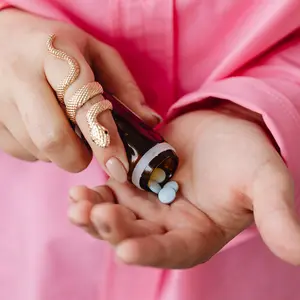
Trials involving medical use of psychotropic substances have been around for years but now researchers are directing increasing attention to the availability of the therapy for trauma patients of color.
The mind-altering substances commonly used in trials, psilocybin—the active ingredient in hallucinogenic (“magic”) mushrooms—and methylenedioxymethamphetamine (MDMA) help patients “look at the bigger picture,” according to Terence Ching, a doctoral student in clinical psychology at University of Connecticut (U-Conn), which ran the only clinical trial to study the effects of MDMA on participants of color suffering post-traumatic stress disorder (PTSD).
Interest in psychedelic science and medicine is strong. New York City’s Horizons: Perspective on Psychedelics conference has convened annually for 13 years. Last year at least 20 other conferences throughout the US covered the latest developments in the field. 60 Minutes recently aired an episode on successful clinical trials at Johns Hopkins and New York University in which psilocybin was found to curtail smoking and binge drinking.
In a 2015 Johns Hopkins trial, psilocybin was found to successfully treat depression and anxiety in cancer patients. The university is working on studies using psilocybin to treat addiction, anorexia, and other conditions.
The Multidisciplinary Association for Psychedelic Studies (MAPS) is currently studying MDMA-assisted psychotherapy as a treatment for PTSD. Its clinical trials are in the final Phase 3 stage, prior to approval from the Food and Drug Administration. Recognizing the high cost of treatment—ranging from $13,000 to $15,000 per treatment round—MAPS recently launched a health equity initiative to assist marginalized clients.
Sara Reed, a therapist who was involved in the U-Conn trial says the body has an intelligence that wants to move towards healing but sometimes barriers are in the way. During treatment with psychedelics, she says, “some of those barriers are removed, so folks can process traumas in their own way, at their own time.”
REFERENCES
Joiner, W. (2020, September 21). Who will benefit from psychedelic medicine? The Washington Post Magazine. https://www.washingtonpost.com/magazine/2020/09/21/psychedelic-medicine-will-it-be-accessible-to-al…