

Food, Farming and Nutrition
Food, Farming and Nutrition
Chokeberry Fights Inflammation
 By
By
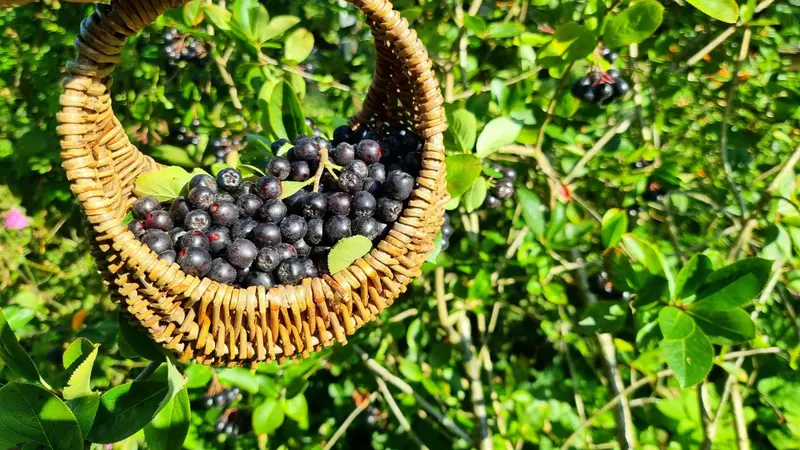
A study, published in Current Developments in Nutrition, explored how a traditional Indigenous food, chokeberry (Aronia melanocarpa), affects inflammation in American Indian participants. The shift away from traditional Indigenous diets to Western eating patterns have led to serious health problems in many Native communities. Researchers wanted to see if reintroducing an indigenous plant like chokeberry could help reduce inflammation—a key factor in many chronic illnesses.
Participants in the study, all American Indian adults, drank two tablespoons of chokeberry juice mixed with water twice a day for six weeks. Blood samples were collected before and after the six-week period to measure inflammation markers. Scientists looked specifically at the activity of three inflammation-related genes (TNF-alpha, IL-1B, and IL-6) in white blood cells. They also examined changes in epigenetics—chemical markers that can turn genes on or off—focusing on a region that controls the IL-6 gene. Additionally, they checked for signs of inflammation in the blood, like C-reactive protein (CRP) and IL-6 protein levels.
The results showed that drinking chokeberry juice led to a significant decrease in the activity of two key inflammation genes, IL-1B and IL-6, though TNF-alpha remained unchanged. One epigenetic marker related to the IL-6 gene also showed a small but meaningful change, suggesting that chokeberry may help regulate inflammation at the genetic level. However, changes were not observed in CRP or IL-6 protein levels in the blood.
The research suggests that chokeberry—a traditional Indigenous food—may help reduce inflammation in American Indians through gene activity and epigenetic changes in white blood cells. More research is needed to fully understand how these foods support long-term health and wellness.
KnoWeWell acknowledges that Indigenous, First Nations, and Native American peoples self-identify differently based upon their region and affiliation. We employ the term "American Indian" as it appears by self-referencing authors in the article cited with utmost respect for the differences in these terms and their applications.