


Mental and Behavioral Well-Being
Mental and Behavioral Well-Being
Smartphones Don’t Make Good Babysitters!
 By
By
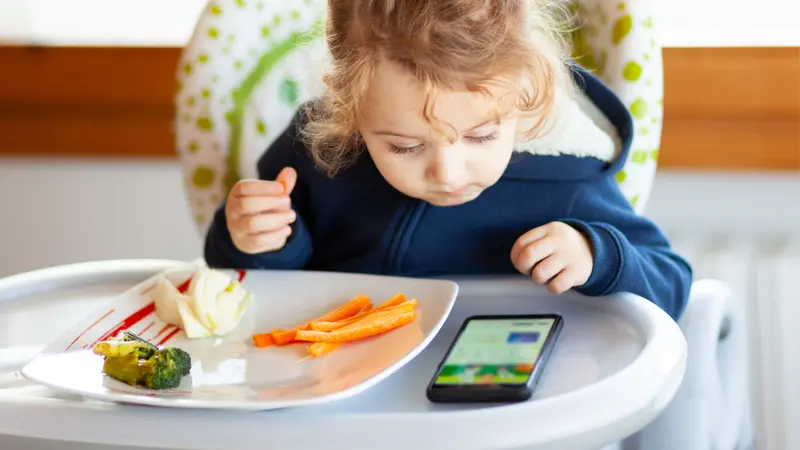
Parents are busy people, often juggling multiple commitments. Add a toddler meltdown into the mix, and it’s easy to understand why parents would reach for a tablet, smartphone or other screen to calm and occupy the child. However, a new study published in JAMA Pediatrics found that children pay the price for this strategy.
Researchers at the University of Michigan sought to learn how this practice of parents using mobile devices to calm young children affects the children’s development—specifically, their executive functioning and emotional reactivity. The prospective cohort study included a sample of English-speaking parents of typically developing children aged 3 to 5 years. The study was conducted from August 2018 to January 2020, with follow-ups done at baseline, three months, and six months.
Parents reported how often they used mobile devices to calm children when upset on a 5-point scale. At each follow-up, the child’s executive functioning and emotional reactivity were assessed.
The study found that the frequent use of mobile devices for calming young children was associated with increased emotional dysregulation, especially in boys, and included rapid shifts between sadness and excitement, greater impulsivity, and sudden mood changes. The researchers suggested that this practice may displace a child’s opportunities for learning emotion-regulation strategies over time. Parents should think twice before using technology as a go-to soothing strategy, and use different approaches instead.
REFERENCES
Radesky, J., et al. (2022, December 12). Longitudinal associations between use of mobile devices for calming and emotional reactivity and executive functioning in children aged 3 to 5 years. JAMA Pediatrics. https://jamanetwork.com/journals/jamapediatrics/article-abstract/2799042