
Healthy Kids
Healthy Kids
Mental Health Symptoms Across Families
 By
By
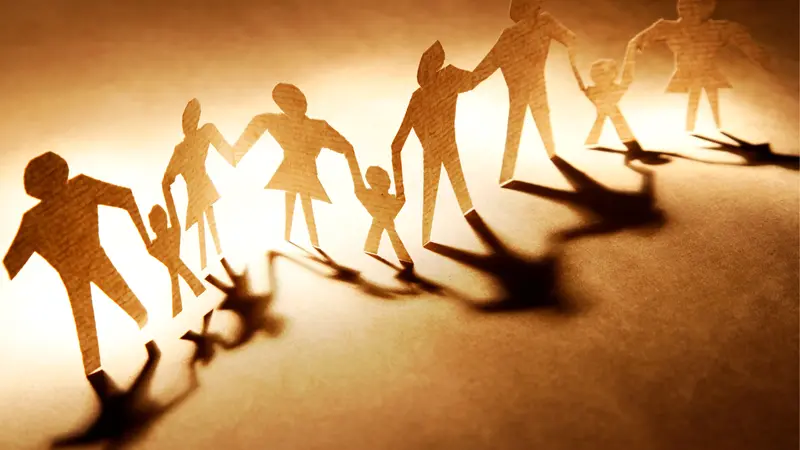
Mental health challenges rarely affect just one person in a family. A 2025 study using data from nearly 3,800 families in the UK shows how mental health symptoms experienced by mothers, fathers, and siblings influence one another both in-the-moment and over several years.
Researchers followed young children (age 3), their older siblings, and both parents over time points two years apart. Instead of looking only at diagnoses, the scientists used a network analysis method. Network analysis is a research design that maps how individual symptoms are connected to one another across different family members. Instead of treating mental health as one overall score, it shows the web of relationships between specific symptoms to reveal how they influence and reinforce each other.
Key findings of the study:
Family members’ symptoms are strongly interconnected.
At each time point, parents’ symptoms were linked to each other, siblings’ symptoms were linked to each other, and there were also clear connections across generations. For example, mothers’ and fathers’ feelings of hopelessness and worthlessness tended to rise and fall together.
Older siblings play a major role in younger children’s mental health.
Across the analyses, older siblings’ emotional and behavioral symptoms were the strongest “bridge” to their younger siblings’ symptoms. Younger siblings’ prosocial behaviors (such as kindness or helpfulness) were also tightly linked to those of their older siblings.
Mothers’ symptoms had the strongest influence on others over time.
Mothers’ symptoms, depressive symptoms in particular, had a strong influence on the rest of the family. When looking at changes from the first assessment to the second, maternal depressive symptoms were the single strongest predictor of later symptoms in the rest of the family.
Mental health “spillover” is real.
The study supports the idea that family members’ well-being is deeply intertwined. Stress, sadness, or behavior problems in one person can ripple through the entire family system.
What This Means:
Treating one person’s mental health in isolation may overlook the complex web of influences within a household. Supporting parents’ mental health—especially the mental health for mothers in a household—and paying attention to sibling dynamics may improve outcomes for children. The findings highlight the importance of family-centered approaches in mental health care.
REFERENCES
Jiang, Z., Tetkovic, I., Neufeld, S., et al. (2025). Family dynamics on mental health: A network analysis. npj Mental Health Research, 4, 54. https://doi.org/10.1038/s44184-025-00168-0